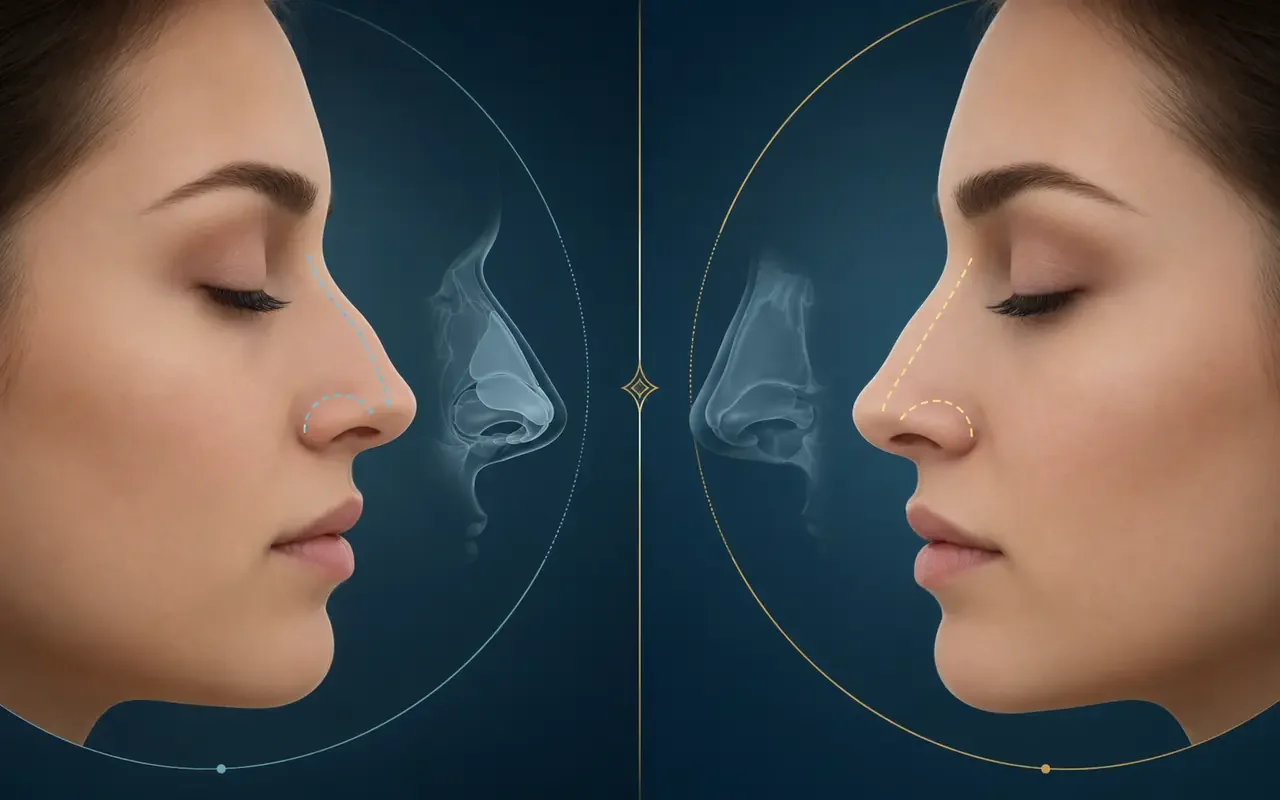
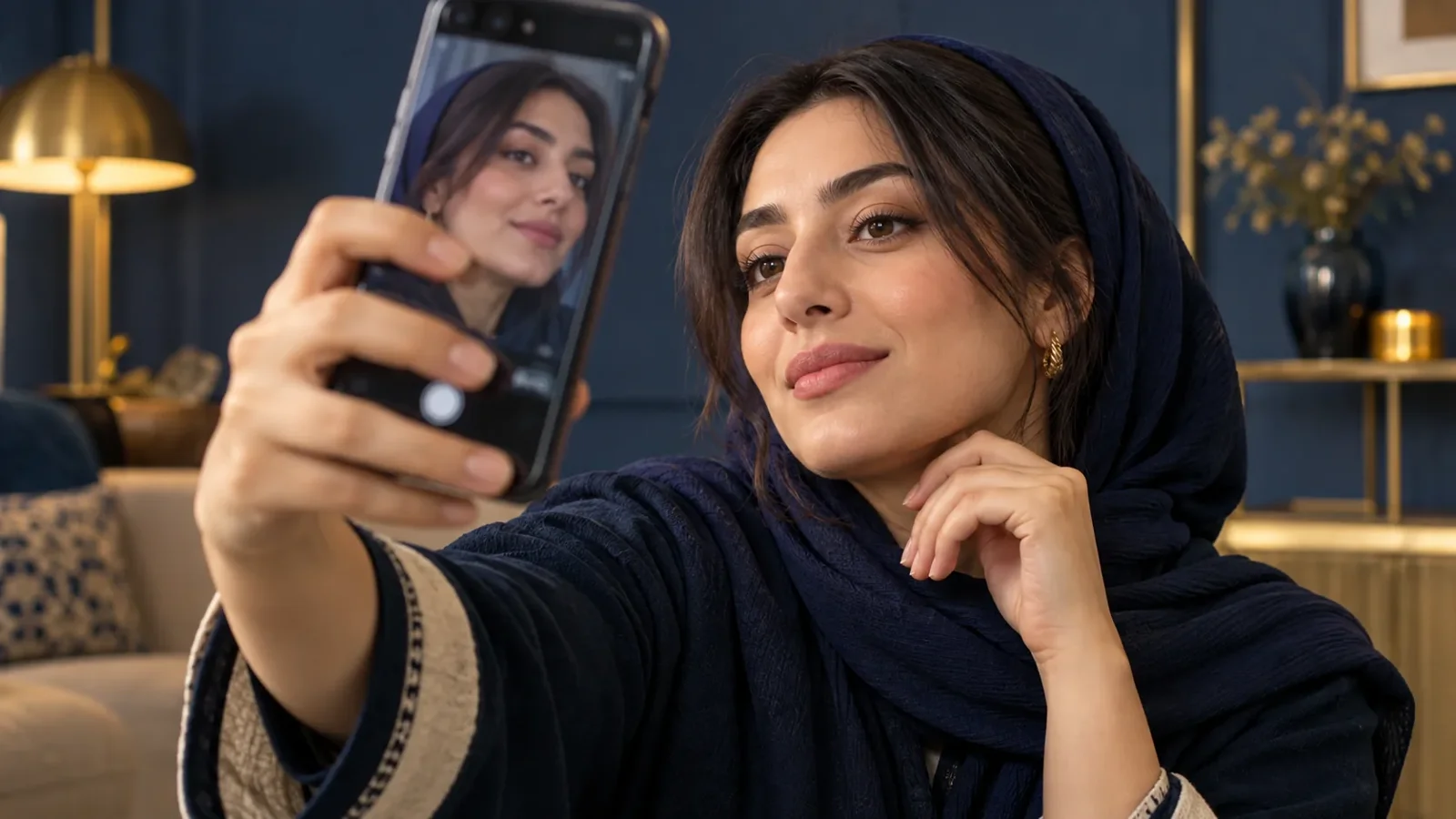
Why does the nose look big in a selfie but more balanced in another photo? Camera distance can change the proportions of the facial features in an image. Before deciding about surgery, let us understand this effect.[2]
What change does camera distance cause in an image?
The nose is one of the prominent parts of the face. When the camera is placed very close, its distance to the nose and to the side parts of the face is not the same; this difference can increase the share of the nose in the image. For a simple picture, hold your hand close to the camera: its proportion to the face differs from when the hand is next to the face, without the real size of the hand changing. This is an example of perspective, not a medical test.
A 2018 study of the "selfie effect" used a mathematical model to explain the change in the apparent size of the nose at different distances. The subject of that article was how the nose is displayed in a photo; from it one cannot calculate a percentage of change or the need for surgery for the face of a specific person. The difference between a near and a far photo does not mean the structure of the nose has changed.[2]
Is this difference only a feeling?
In a study with 30 volunteers, the researchers compared close-up selfies with a clinical photo taken from a greater distance. The apparent length of the nose was on average greater in the close-up photos; but not all measurements changed in the same way. For example, the width of the alar base did not change significantly. Therefore the sentence "a selfie enlarges all parts of the nose equally" is not accurate. Also, the average of a group is not a template for measuring your face.[3]
Does a professional camera solve the problem completely?
In another study with 12 participants, a phone camera and a professional camera were examined at different distances and settings. Very close photos with both types of camera could show the middle part of the face differently. So the name of the camera alone is not decisive; distance, angle and the way the image is captured matter too. A more expensive camera, if it is very close, does not necessarily make a better standard for judging facial proportion.[4]
Make a simpler and fairer comparison
To understand the role of the photo, we suggest this comparison: have several unfiltered images from the front and in profile; in each series, keep the light and the head position as constant as possible. Instead of bringing the phone close to your face, ask another person to take the photo from a suitable distance. The goal is not to find a "flawless photo"; the goal is not to confuse a difference in photographic conditions with a real difference in the face.[2, 4]
For example, if one image was taken from above and another from below, comparing them gives no clear answer to the question "Has my nose changed?" If you take photos to a consultation, it is better to bring ordinary photos and your specific concern: "I am unhappy with the bridge of my nose in profile" is a more precise explanation to start the conversation than "I did not turn out well in this selfie."
A photo does not replace an examination
In a rhinoplasty consultation, your expectations of appearance are reviewed together with the state of breathing, the medical history and the facial examination. A photo can be a tool for conversation, but on its own it does not give complete information about skin thickness, the inside of the nose or the possible result of surgery. A simulated image should also be used to explain the goal, not as a definite commitment to the result.[5]
Short questions
If the nose looks big in a selfie, does that mean I need surgery?
No such conclusion can be drawn from a selfie alone. First clarify the conditions of the photo and your own wish; a treatment decision requires an in-person evaluation.[2, 5]
Which photo should I take to the consultation?
A few ordinary unfiltered photos and a short explanation about the area of concern are more useful for starting the conversation than one heavily edited, selected photo. A standard clinic photo, if needed, is taken during the evaluation process.[4, 5]
To learn about the evaluation of the appearance and function of the nose, see the Rhinoplasty page and the article Questions before nose surgery.
If your photo has made you think about surgery
A close-up photo does not replace a review of the function of the nose. In the specialist conversation published on Webda, preserving breathing quality is introduced as one of the important criteria of nose surgery. So if you go for a consultation, talk about breathing and nasal congestion too; the aim of the consultation should not be only to look like a photo.[1]