You have booked a consultation, saved a few photos, and perhaps the most important question in your mind is: "How will I look after the surgery?" This question is necessary, but not sufficient. A good session should help you make a more informed decision about the goal, the options, the limitations and the path of follow-up. You do not need to know all the surgical terms in advance; a few clear questions are more useful than a long list of technique names.
1. What exactly is my goal?
Before the session, write your concern in simple words: the prominence of the bridge, the width of the tip, asymmetry or a breathing problem. If you have several wishes, set their priority. In a rhinoplasty consultation, appearance and breathing, the medical history and the examination are put together. Your wish is not meant to be replaced by another person's photo; an image can explain what you like, but the evaluation must be for your own nose.[7]
2. Which change is possible and which expectation is not realistic?
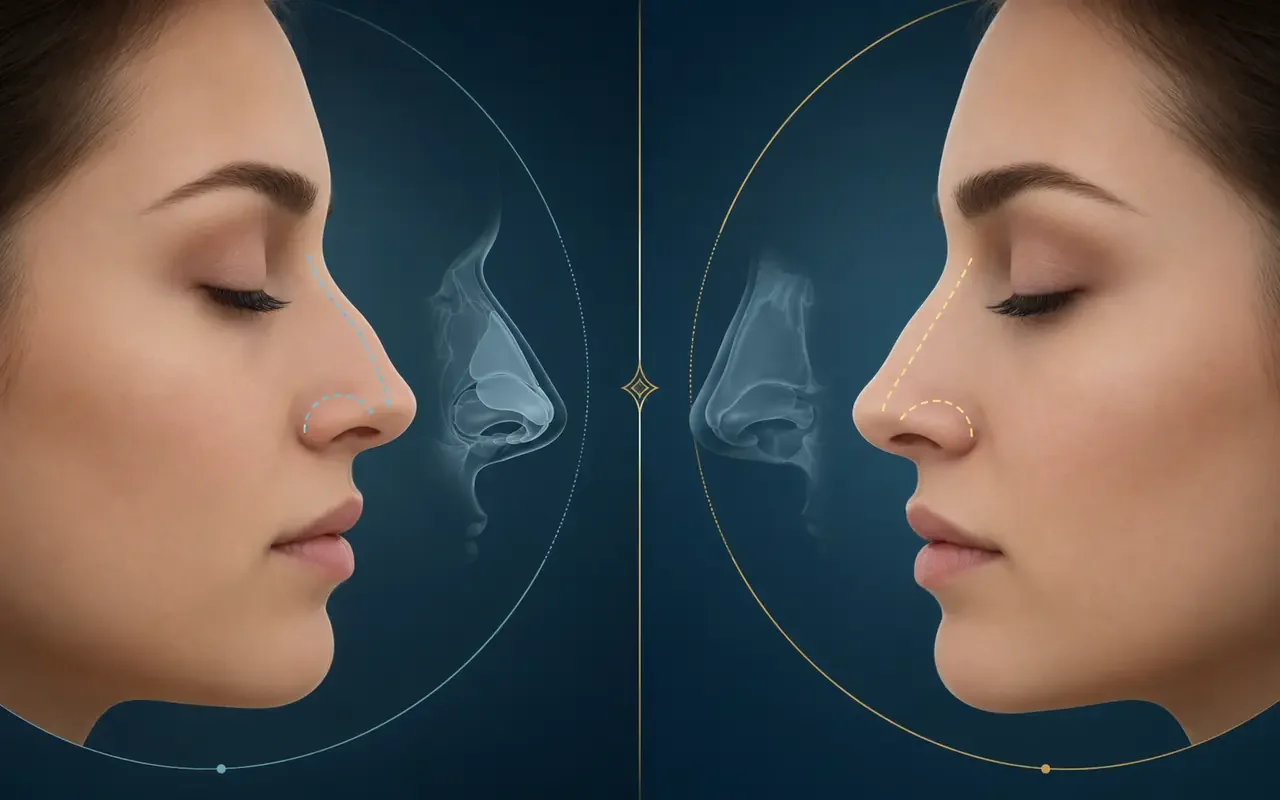
Ask: "With the features of my skin and the structure of my nose, which changes can be expected? What will probably not turn out the way I want?" An understandable answer is better than the vague promise "it will be completely perfect". If a simulated image is shown, ask about its difference from the real result. Take time to clarify the goal and the limitations, and do not make the decision depend only on how pleasing the image is.[8]
3. How will my breathing be assessed?
If you have congestion, snoring or another problem, describe it precisely; the label "aesthetic" should not cause this part of the conversation to be dropped. You can ask how the breathing problem and the appearance goal relate in the proposed plan and how they are evaluated after treatment. Some concerns may need a separate evaluation.[7]
4. Why was the proposed method chosen for me?
Instead of only asking "Is open or closed better?", ask what plan the doctor has for your specific problem and the reason for the choice. Asking for an explanation with images or simple words is entirely reasonable. If you did not understand a term, ask for it to be explained again right there. The name of a method alone is not a complete comparison of the result and the risks.[3]
5. What are the risks and the plan for handling a complication?
Infection, a breathing problem, poor healing, a change in sensation and an undesirable result are among the subjects whose likelihood and handling should be discussed. Not everyone has the same risk. Ask which history or feature matters more in your case and, if a worrying sign appears, exactly whom to contact and by what route. Hearing the explanation of complications is part of decision-making.[4]
6. How does recovery fit with my life?
Returning to work, exercise, travel or daily activity is not a single plan for everyone. The type of surgery, the course of healing and the type of your activity matter. If your work is physical, you care for someone at home or you have an upcoming trip, mention these details and ask for the timing that suits you. The reduction of the initial bruising is not the same as the finalizing of the shape of the nose.[3, 5]
7. When should we compare photos?
The form of the nose changes over months after surgery. The ASPS guide raises a period of up to about a year for the details of the shape to become more complete; the actual time may differ. Ask when is suitable for reviewing the course and when for judging the result. An early photo does not answer all long-term concerns.[6]
8. If I am not satisfied or change my mind, what path do I have?
Before surgery, get a clear explanation about follow-up, evaluation of a concern, the right time for later decisions and possible costs. Also raise the possibility of needing additional treatment or surgery. It is better to know which services are included in the announced plan and cost. This list is a practical suggestion for making the conversation transparent; it does not announce any clinic's specific promise or policy.[3, 4]
What information should I bring?
Prepare a list of medicines and supplements, drug allergies, underlying diseases and previous surgeries. Do not hide tobacco use or anything that may affect anesthesia or healing. You do not need to start or stop any medicine yourself in order to prepare; decisions about medicines must be coordinated with the treatment team.[7]
A short sheet for the end of the session
After the consultation, try to complete these four sentences in your own words: "My main goal is...", "The important limitation is...", "For recovery I need...", and "If a problem arises I will follow up through...". If you still cannot, raise the remaining question again. This exercise is a suggestion for making sure the conversation was understood; it is not a medical test.
To learn about the service, see the Rhinoplasty page. If your concern is more from a photo, read the article Nose in selfies, and if you have questions about thick skin, read the piece Fleshy nose.
An important question from an official Iranian source
In a specialist conversation about therapeutic rhinoplasty, Webda emphasizes preserving proper breathing and examining airway problems. In the consultation session ask: "What effect does your proposal have on my breathing, and how will a possible airway problem be examined?" This question is raised alongside your appearance wishes, and its answer requires an examination.[1]